
Let me begin with two case studies to explain what is sudden cardiac arrest. One of my patients, a 55-year-old surgeon himself, suffered a heart attack. His heart pumping efficiency went down to 30 per cent after it and I suggested implanting a defibrillator under his skin as it could save him from emergencies. But he ignored the suggestion. Soon after his recovery, he went to the nearby mall with his friends, not too far out from the hospital. He collapsed suddenly, losing consciousness. Since two doctors were with him, they could revive him with cardio-pulmonary resuscitation or CPR. Besides, the mall had a device called an automated external defibrillator (AED) with which the two doctors could administer shocks. They revived him, rushed him to hospital and we had to put him on a ventilator and heart support machines. We sent him home only after putting the defibrillator under his skin. Another patient of mine was on a trans-Atlantic flight to New York and collapsed on board. The air hostess was trained to administer an AED shock and the crew managed to keep him alive till the flight landed and he could be rushed to hospital. He too survived.
WHAT’S A SUDDEN CARDIAC ARREST?
Now the point of both these cases is to highlight that they made it only because they had supportive aids and trained personnel around them within the survival window to bring them back. Most undergoing sudden cardiac arrest do not have the privilege of such settings and are unaware of their cardiac condition — despite having a history but lacking in tests and checks — and lose their lives. In fact, a sudden cardiac arrest is one of the commonest reasons for cardiac-related mortality. And men tend to die more than women.
Simply put, a sudden cardiac arrest is described as a condition where the heart comes to a standstill and loses all its activity due to an irregular heart rhythm. You can say that the heart’s electrical system malfunctions and becomes irregular suddenly. The heart beats very fast and its ventricles quiver, or what we call ventricular fibrillation. The lower chambers contract in a very rapid and uncoordinated manner. As a result of these irregular electrical impulses, the heart cannot pump oxygenated blood that your body needs. In the first few minutes, the blood flow to the brain is poor, causing the patient to lose consciousness. And within eight minutes, all major organs shut down in the absence of a blood flow.
HOW IS SUDDEN CARDIAC ARREST DIFFERENT FROM A HEART ATTACK?
Sudden cardiac arrest isn’t the same as a heart attack. A heart attack usually is the result of blockages and clotting in arteries which restrict blood flow to the blocked parts of the heart, causing muscle scarring. A sudden cardiac arrest is not caused by a blockage. However, if the heart attack can change the heart’s electrical impulses, then it could become a trigger for a sudden cardiac arrest. A heart attack is quickly identifiable with ECG changes. A sudden cardiac arrest doesn’t give you that time at all.
WHAT CAUSES CONDITIONS FOR A SUDDEN CARDIAC ARREST?
Usually, it is a prevailing history of heart blockages, which may trigger severe arrhythmia. Sometimes it is due to low heart pumping efficiency, or genetic conditions like cardiomyopathy, which compromises the heart muscles to the extent that they are not able to pump blood properly to the rest of the human body. Sometimes, it could be triggered due to changes to your heart’s structure because of disease or infection or because of extreme blood loss due to some other injury. But what is worrisome is that it happens to a lot of asymptomatic people, making them the high risk group.
WHAT ARE SYMPTOMS?
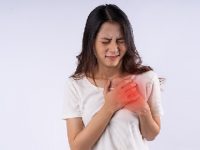
Since the onset is very sudden sending you into a fainting spell, do not ignore any pain in the jaw, neck or chest area. Don’t wait and attribute it to gas or acidity. A persistent discomfort should not be overlooked. This may be accompanied by shortness of breath, weakness, a fast-beating, fluttering or pounding heart.
HOW IS SUDDEN CARDIAC ARREST DIFFERENT FROM A HEART ATTACK?
Sudden cardiac arrest isn’t the same as a heart attack. A heart attack usually is the result of blockages and clotting in arteries which restrict blood flow to the blocked parts of the heart, causing muscle scarring. A sudden cardiac arrest is not caused by a blockage. However, if the heart attack can change the heart’s electrical impulses, then it could become a trigger for a sudden cardiac arrest. A heart attack is quickly identifiable with ECG changes. A sudden cardiac arrest doesn’t give you that time at all.
WHAT CAUSES CONDITIONS FOR A SUDDEN CARDIAC ARREST?
Usually, it is a prevailing history of heart blockages, which may trigger severe arrhythmia. Sometimes it is due to low heart pumping efficiency, or genetic conditions like cardiomyopathy, which compromises the heart muscles to the extent that they are not able to pump blood properly to the rest of the human body. Sometimes, it could be triggered due to changes to your heart’s structure because of disease or infection or because of extreme blood loss due to some other injury. But what is worrisome is that it happens to a lot of asymptomatic people, making them the high risk group.
WHAT ARE SYMPTOMS?
Since the onset is very sudden sending you into a fainting spell, do not ignore any pain in the jaw, neck or chest area. Don’t wait and attribute it to gas or acidity. A persistent discomfort should not be overlooked. This may be accompanied by shortness of breath, weakness, a fast-beating, fluttering or pounding heart.
Those with a family history of heart disease, who are into smoking, have diabetes and elevated blood pressure, or are overweight need to do their annual cardiac profile test. This should include a lipid analysis and cholesterol as well as a stress test. Not only that, they should take these tests the moment they turn 30. The easiest way of risk assessment is to measure your waist circumference to hip circumference ratio. A study in 2021 showed that people who carry more of their weight around their middle portion or belly and have an apple-shaped body may be at a higher risk of heart disease, Type 2 diabetes and premature death than people who carry more of their weight in their hips and thighs or what we call a pear-shaped body. So even if Body Mass Index (BMI) is within limits, you are still at an increased risk of disease. The WHO has laid down the ideal waist-to-hip ratio as 0.9 or less in men and 0.85 or less for women. In both men and women, a WHR of 1.0 or higher increases the risk of heart disease and other conditions that are linked to being overweight.
Of course, I cannot but emphasise the need for a major lifestyle correction through a discipline about diet, exercise, weight control and sleep.
https://indianexpress.com/article/health-wellness/sudden-cardiac-arrest-dont-wait-till-60-to-get-first-heart-tests-heart-disease-8549715/

